

History / Mandurah

NSWICC is dedicated to creating a self-sustaining chamber model that supports Aboriginal entrepreneurs by building skills, removing barriers and identifying opportunities. Through strategic alliances and partnerships, we work collaboratively to develop and accelerate business goals

Timeline

Our 20 year journey from grassroots to peak body

2006
2008
2009
2010
2011
2012
2013
2014
2015
2016
2017
2018
2019-20
2021
2022
2023
2024
2025
2026
2006
Launch of Australia’s first Indigenous Chamber of Commerce; the Mandurah HIBC
2008
Open for Business: Developing Indigenous enterprises in Australia Report released containing 15 significant recommendations relevant to the Indigenous Business Sector
2009

NSWICC registered as first Peak Body for Aboriginal Businesses in NSW & first State Chamber for Aboriginal Business in Australia

NSWICC wins Premiers Award for Excellence & Leadership for Economic Impact in Indigenous Communities

2010

Indigenous Business Council of Australia (IBCA) formed as a National Voice for Aboriginal & Torres Strait Islander Businesses

2011

NSWICC officially launched by Senator Mark Arbib, Federal Minister for Indigenous Affairs

2012

NSWICC Chair, Deb Barwick selected to Co-Chair the World Indigenous Business Forum held in Sydney, Australia.

Report shows NSWICC is no. 1 feeder to the Indigenous Business Sector Pipeline. A survey of Supply Nation’s 71 suppliers showed that 32 (44%) had been referred by the NSWICC & that the Chamber had played an important role in their business success


2013

OCHRE – Opportunity, Choice, Healing, Responsibility, Empowerment – NSW Government’s plan for Aboriginal affairs released

2014

NSWICC & NSW Government sign MOU – forming a historical alliance to inform & implement key initiatives under OCHRE relating to the economic empowerment of Aboriginal Communities in NSW

NSW Government Procurement Board Directive enabling agencies to contract Aboriginal Suppliers for goods & services up to $150k

Law Society NSW & NSWICC launch partnership providing access to pro bono legal advice, support and representation

TAFE NSW & NSWICC partnership providing Indigenous Businesses & their Employees access to tailored programs & qualifications

NSW Deputy Ombudsman for Aboriginal programs appointed

2015

NSW Aboriginal Participation in Construction Policy (APIC) launched

NSW Aboriginal Business Portal launched as the First Portal & Database designed to link Aboriginal suppliers in NSW with Government & Private Sector Procurement

KPMG & NSWICC partnership

NSW Department of Education & Communities & NSWICC form partnership to support linkages between Aboriginal Suppliers and the Department

Minerals Council NSW & NSWICC form partnership aiming to increase Indigenous Suppliers participation in NSW Mining

The First Australians Chamber of Commerce & Industry (FACCI) launched as National peak body to represent the interests of State & Territory Indigenous Chambers of Commerce & their members

2016

Fostering Economic Development for Aboriginal people in NSW report to Parliament under s.31 of the Ombudsman Act 1974

NSW Standing Committee on State Development Inquiry into Economic Development in Aboriginal Communities

2017

 Bridging the Indigenous Supply Gap Report – UNSW Business School 

NSWICC & the Australian Industry Group (AIG) Partnership 

NSW Government & NSWICC Industry Based Agreement (IBA) launch 

NSWICC 2020 Roadmap Launch – A Social & Economic Impact Strategy 

Draft Federal Government Indigenous Economic Development Strategy

First international guidance standard on sustainable procurement (ISO20400) published

2018

NSW Aboriginal Procurement Policy (APP) officially comes into effect, recognising NSWICC as a certifying body:

  • Direct procurement up to $250,000 from suitable qualified Aboriginal businesses
  • Award 3% of total goods and services contracts to Aboriginal businesses
  • Supporting 3,000 Aboriginal job opportunities by 2021
2019-20

NSWICC continues sector advocacy, paving the way for stronger APP rollout in 2021.

2021

Updated NSW Aboriginal Procurement Policy (APP) comes into effect:

  • Requires clusters to direct 1% of total addressable spend to Aboriginal-owned businesses by the end of 2021

  • Aims to award 3% of total goods and services contracts to Aboriginal-owned businesses by the end of 2021 

  • Support ~ 3,000 full-time employment opportunities for Indigenous peoples through NSW Government procurement activities

  • Assigns targets to each cluster to improve accountability, with progress toward achieving the targets to be published

  • Requires 1.5% Aboriginal participation across all high-value contracts over $7.5 million 

  • Permits agencies to negotiate directly with an Aboriginal-owned business for all procurements up to $250,000 even where there is a mandated prequalification scheme or panel in place. 

NSWICC hosts the inaugural Infrastructure and Construction Forum on Wonnarua Country in the Hunter Valley as a one-day event.
2022

The NSWICC Infrastructure and Construction Forum expands to being a 2-day event only in its second year. 

2023

APP review commences - NSW Treasury undertakes evaluation of the effectiveness of the Aboriginal Procurement Policy and seek stakeholder feedback to enhance outcomes for NSW's First Economy

2024

Indigenous Supplier Development Program (ISDP) - launched by NSWICC with University of Sydney Business School. A 3-month tender-readiness and capability development initiative for Indigenous business owners to build strategic procurement readiness. Supported and sponsored by Turner Townsend, Logikal, HK, Deloitte

Yinaar Ngaambi-li Program - launched by NSWICC and funded by Women NSW. a 4-month capability development initiative for Indigenous Women business owners.

The Summit 2024 - the NSWICC Infrastructure and Construction Forum rebranded to The Summit expanding the amount of exhibitors and attendees attracting all industries.

2025

National Indigenous Business Chamber Alliance (NIBCA) is announced with NSWICC as a member and NSWICC Chair Deb Barwick elected as Deputy Chair.

The Summit 2025 was the NSWICC's largest convenings to date on Wonnarua Country — focused on networking, tradeshow engagement, masterclasses and awards celebrating Indigenous business excellence and partnerships. 

The Summit continues to serve as a key platform bridging buyers and Indigenous suppliers, highlighting ongoing gaps between policy ambition and real contract engagement.


2026

Federal Indigenous Procurement Policy (IPP) reforms (from 1 July 2025)

  • Commonwealth IPP target increases from 2.5% to 3% of total contract value; progressively rising to 4% by 2030;
  • Stricter eligibility requiring >51% Indigenous ownership and control - aimed at integrity and tackling policy misuse (black cladding).

These national shifts align with ongoing state efforts to boost genuine Indigenous economic engagement.

NSWICC launches the Equitable Procurement Practices training program aimed at educating government and industry buyers on the APP and how to recognise and avoid black cladding.

Our Story


From Grassroots to Peak Body: The Journey of NSWICC

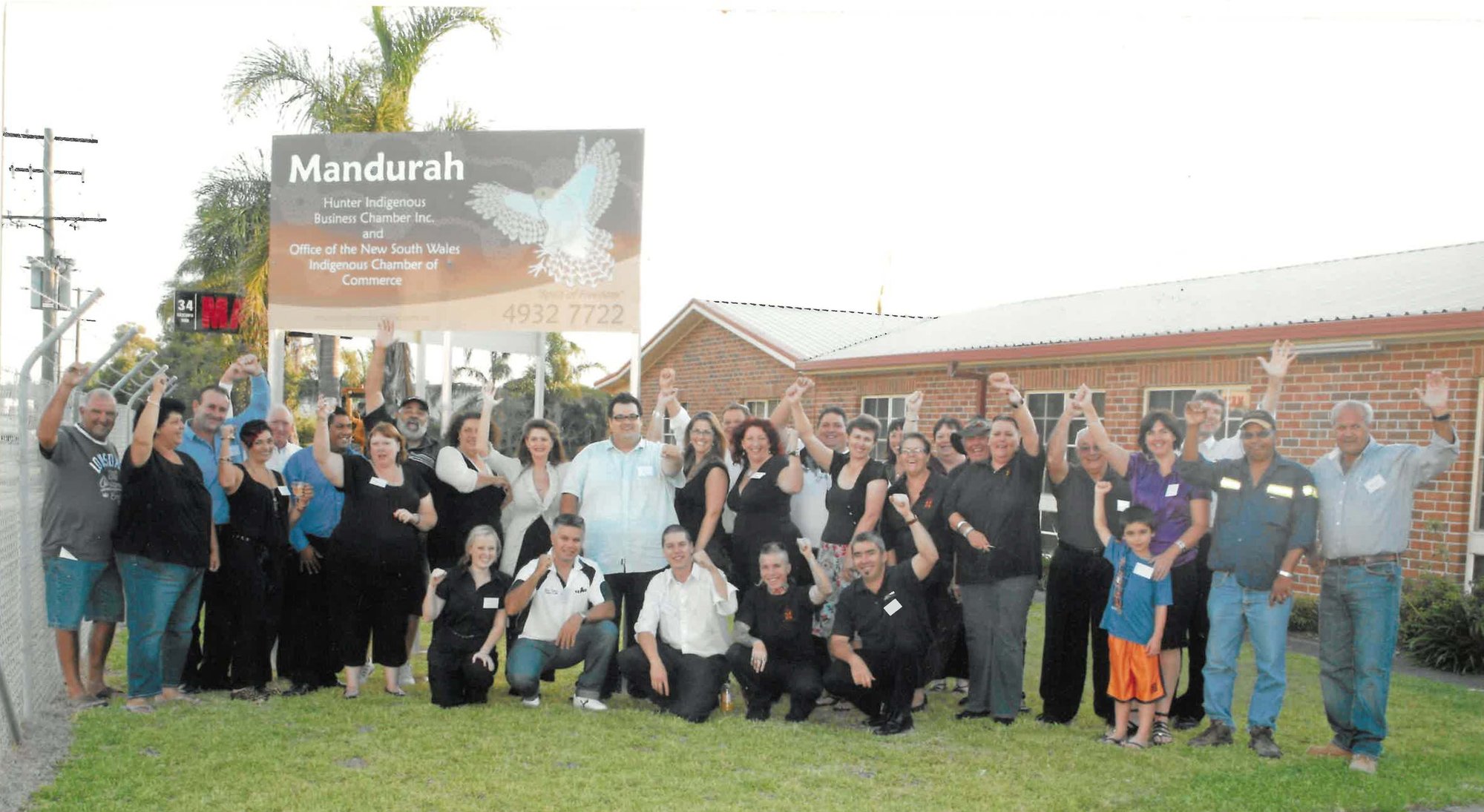
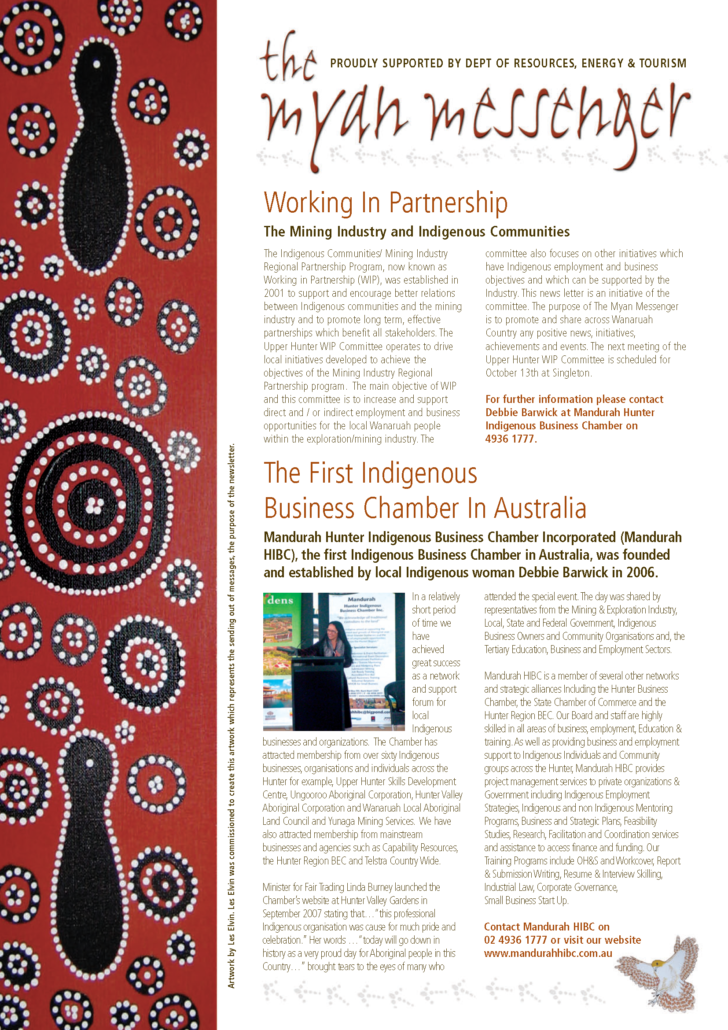
The NSW Indigenous Chamber of Commerce  proudly carries the legacy of Mandurah Hunter Indigenous Business Chamber Inc (Mandurah HIBC) - a visionary grassroots organisation born in the Hunter Region of New South Wales in early 2006.

Mandurah HIBC was founded by Deb Barwick, a proud Aboriginal woman and business leader who recognised the need for a culturally safe and relevant space for Aboriginal entrepreneurs. At a time when few support structures existed for Indigenous business owners, Deb brought together Aboriginal people with a shared desire to connect, exchange ideas and access the knowledge and tools needed to succeed in business.

What began as a small, community-driven network quickly gained momentum.
mandurah logo copy

Creating a One-Stop Shop for Aboriginal Business

In its first year, Mandurah HIBC built strong relationships with government agencies, regulators, training providers and private sector stakeholders to create a One Stop Shop environment for Aboriginal businesses. This meant business owners could not only connect with each other but also access training, mentoring, procurement pathways and commercial opportunities - all in one place.

As the network grew, so too did its impact. Mandurah HIBC evolved from a support hub into a bold and respected advocate for Aboriginal economic development. Its membership began to extend beyond the Hunter, attracting Aboriginal businesses from neighbouring regions and across the state.
Group Photo at Mandurah Office

A National Voice Emerges

In 2008, the chamber's growing influence reached national attention. Mandurah HIBC’s Chair and a large delegation of Aboriginal business owners were invited to Canberra to present the Chamber model as a practical and community-led way to increase Aboriginal participation in the economy. The concept resonated strongly: a structured, grassroots approach that could build a strong pipeline of Aboriginal suppliers.

In 2009, Mandurah HIBC formally registered the NSW Indigenous Chamber of Commerce (NSWICC) - a statewide organisation built on the proven foundation of its grassroots beginnings. The official launch of NSWICC followed 18 months later, with the Chamber continuing to gain recognition at both state and national levels.

That same year, Deb Barwick was invited back to Canberra to contribute to the national conversation on Indigenous business. Her advocacy helped shape the creation of the Australian Indigenous Minority Supplier Council (AIMSC), now known as Supply Nation.
history photo - Mandurah

Recognition and Growth

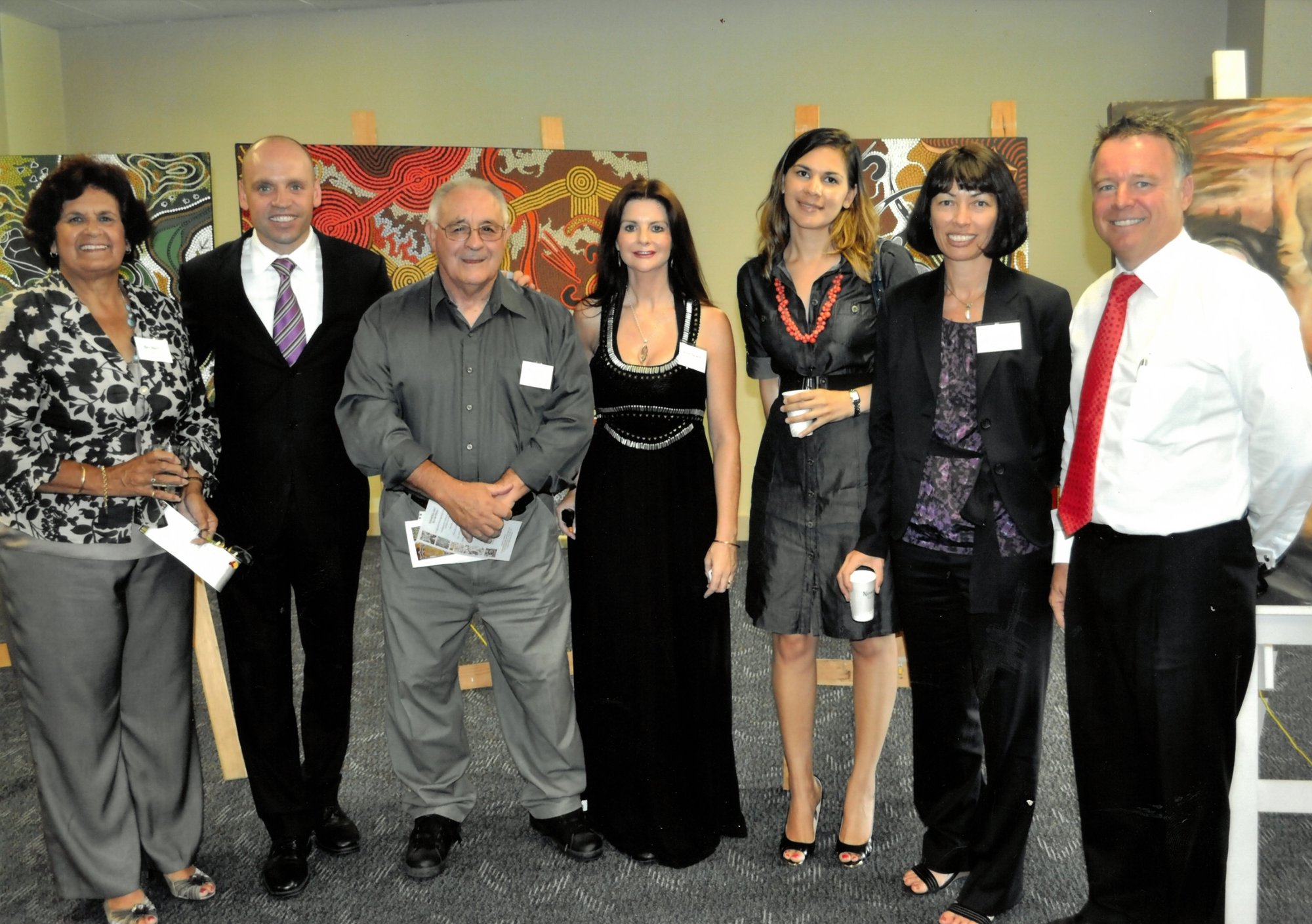
In 2010, the work of Mandurah HIBC was formally acknowledged when the Chairperson and Board were presented with the NSW Premier’s Award for Excellence - a milestone moment that recognised the Chamber’s significant contribution to Aboriginal economic empowerment.

The following year, at the official launch of NSWICC, Senator Mark Arbib addressed over 300 guests and announced Federal Government support for the development of a National Indigenous Chamber of Commerce Network - a powerful acknowledgment of the movement Mandurah had started.

Since then, NSWICC has continued to lead the way. What began in one region is now part of a broader national network of State and Regional Indigenous Chambers of Commerce representing the voices and interests of more than 4,500 Aboriginal business owners.
Myan-Messenger-Aug-091_Page_1-728x1030

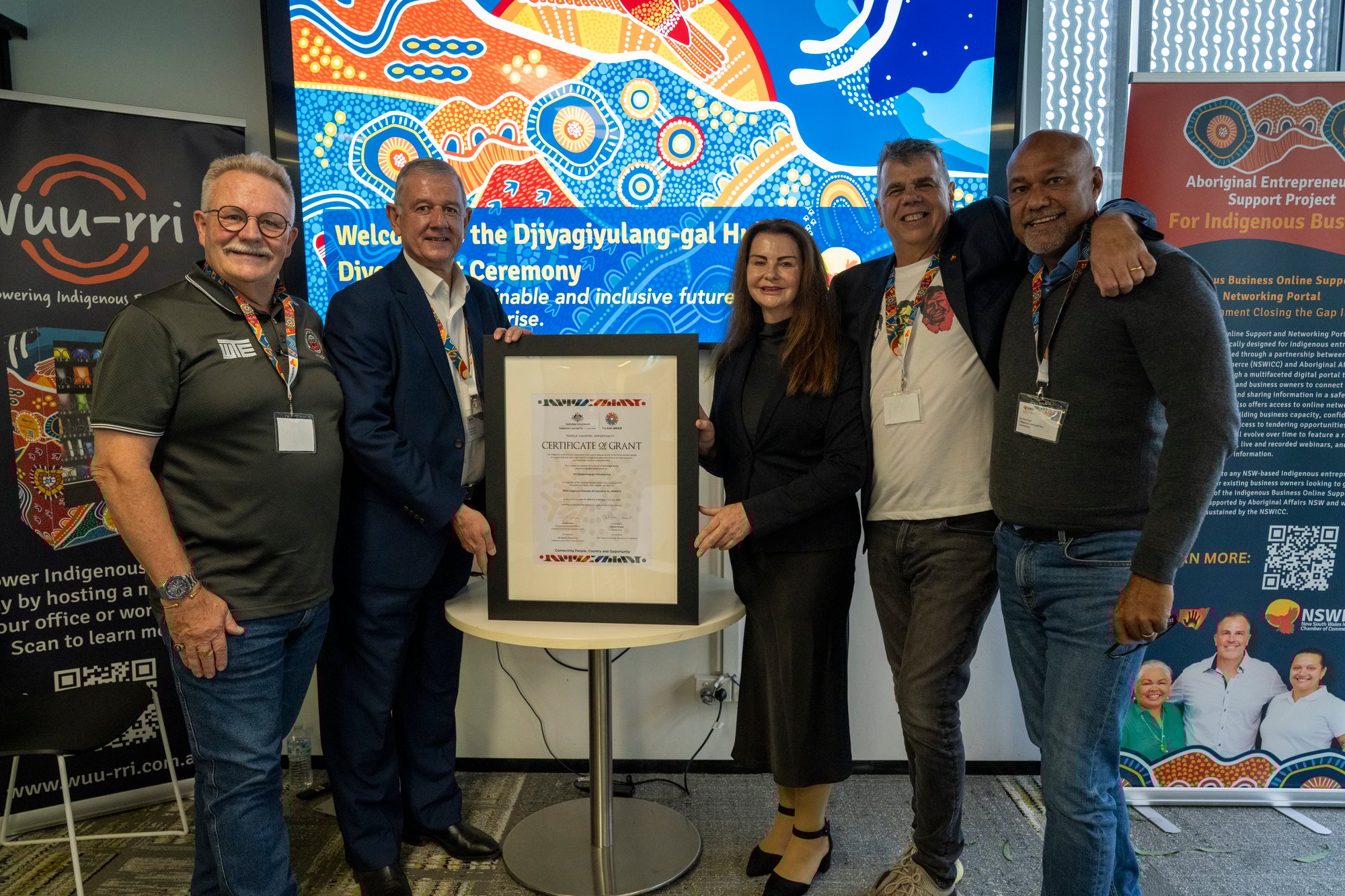
2025 - Divestment

Today: NSWICC as the Peak Body for Aboriginal Business in NSW

NSWICC stands proudly as the peak body for Aboriginal business in New South Wales. We continue to deliver place-based and state-wide programs, strengthen supply chains, influence policy and work hand-in-hand with Aboriginal businesses, communities and allies to create lasting economic change.

We honour our origins in the Mandurah HIBC and the cultural and community wisdom that guided its creation. And while the Indigenous Chamber of Commerce model remains unfunded to this day, NSWICC remains fiercely committed to advancing the economic aspirations of our people.

Our story is one of self-determination, leadership and resilience - and it continues to grow.
NSWICC_Redfern Hub Divestment Jan 23rd_-59